
Losing a tooth can feel like a big deal. Because it is. Beyond the obvious gap in your smile, missing a tooth affects how you chew, how you speak, and even how your other teeth hold up over time. Neighboring teeth start to shift. Your bite can change. It’s a domino effect that most people don’t see coming.
Modern dentistry gives you excellent options. At his Annapolis dental office, Dr. Vernon Sheen helps patients replace missing teeth with two proven solutions: dental implants and dental bridges. Both work well and look natural, but they’re not the same. Here’s what you need to know to have an informed conversation with Dr. Sheen when you consider dental implants vs. bridges in Annapolis, MD.
What Is a Dental Bridge?
Dental bridges do exactly what it sounds like. They bridge the gap. The tooth on either side of the missing one gets shaved down to accept crowns. Those crowns support a false tooth, or teeth, in the middle. The whole thing gets cemented into place as one solid piece.
The upside: Bridges are faster. You can usually get one in two or three appointments. They do not require surgery. They tend to cost less upfront than implants.
The downside: Your healthy neighboring teeth get filed down permanently. That is a big deal. Those teeth were fine before, but now they will need crowns for life. Bridges also typically last 7 to 15 years before needing replacement.
What Is a Dental Implant?
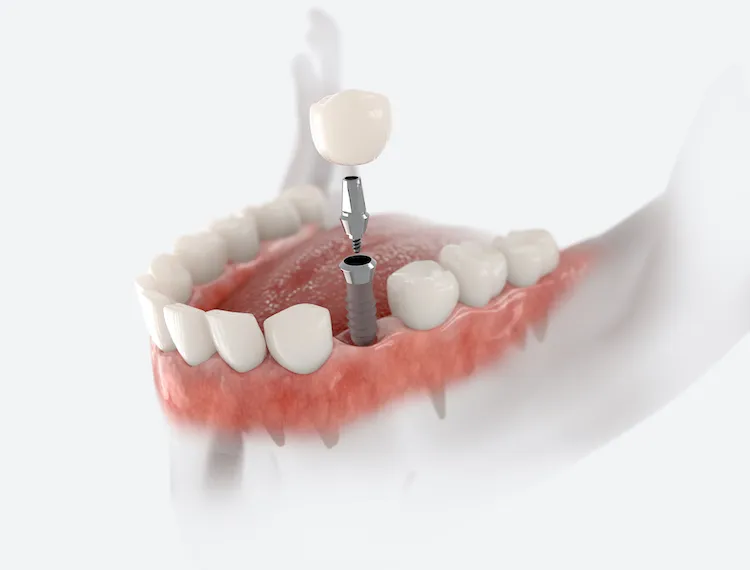
An implant replaces both the tooth and its root. An oral surgeon surgically places a small titanium post into your jawbone. Over several months, your bone grows around that post. This process is called osseointegration. Once the post is solid, Dr. Sheen attaches a custom crown on top. The result feels and functions just like a real tooth.
The upside: Nothing else comes close to a natural tooth. Implants do not involve your neighboring teeth at all. They preserve your jawbone, preventing the sunken look that can happen after tooth loss. With good care, implants can last 30 years or more, often a lifetime.
The downside: Implants take longer. The whole process can stretch over four to eight months. They cost more upfront. They require a minor surgical procedure.
The Long-Term Cost Comparison
When comparing dental implants vs. bridges, it is important to look beyond the upfront cost.
A bridge may cost less initially. But it will need to be replaced every 7 to 15 years. That means additional costs over time. Each replacement may also require more work on the supporting teeth.
An implant costs more upfront. But it can last a lifetime. Over 20 or 30 years, an implant often proves to be the more cost-effective option.
Dr. Sheen will help you understand the full financial picture. He offers financing options to make treatment more manageable.
How Bridges and Implants Affect Your Jawbone
One of the most important differences between dental implants and bridges is the effect on your jawbone.
When you lose a tooth, the bone underneath starts to shrink. This happens because the tooth root is no longer there to stimulate the bone. Over time, bone loss can change the shape of your face. It can make you look older.
A bridge does nothing to prevent bone loss. It sits on top of the gums and relies on neighboring teeth for support. The bone underneath continues to shrink.
An implant replaces the tooth root. It stimulates the bone just like a natural tooth. This prevents bone loss and preserves your facial structure.
If preserving your jawbone is important to you, an implant is the better choice.
The Impact on Healthy Teeth
Another key factor in the dental implants vs. bridges decision is the impact on your healthy teeth.
A bridge requires filing down the teeth on either side of the gap. These teeth are permanently altered. They will always need crowns. This can weaken them over time.
An implant stands on its own. Your neighboring teeth stay untouched. They remain healthy and strong.
If you have healthy teeth adjacent to the gap, an implant may be the better option.
Which One Should You Choose?
That depends on your situation, your budget, and your goals.
Choose a bridge if:
- You need to replace a tooth quickly
- Your neighboring teeth already need crowns
- The upfront cost is your main concern
- You are not comfortable with surgery
Choose an implant if:
- You want the longest-lasting solution
- Your neighboring teeth are perfectly healthy and you want to keep them that way
- You are willing to invest more time and money upfront for better long-term value
- You want to preserve your jawbone and facial structure
Dr. Sheen can help you understand if implants are the right choice for you.
What Dr. Sheen Wants You to Know
There’s no single right answer for everyone. Dr. Sheen has been practicing in Annapolis since 1991. He’s placed countless bridges and implants. What he’s learned is that the best choice is the one that fits your life, your health, and your goals.
Some patients want the fastest fix. Others want the most permanent one. Both are valid.
What’s not valid is doing nothing. Leaving a gap in your smile doesn’t just affect how you look. It affects how your whole mouth works. Neighboring teeth drift. The opposing tooth may grow too long. Your bite can shift. Over time, a simple missing tooth can turn into a complex problem.
Come Talk It Through
The best way to know which option is right for you is to sit down with someone who does both every week.
Call our office at (443) 482-5202 to schedule a consultation. We’ll examine your smile, talk about what matters most to you, and help you make a choice you’ll be happy with for years to come.